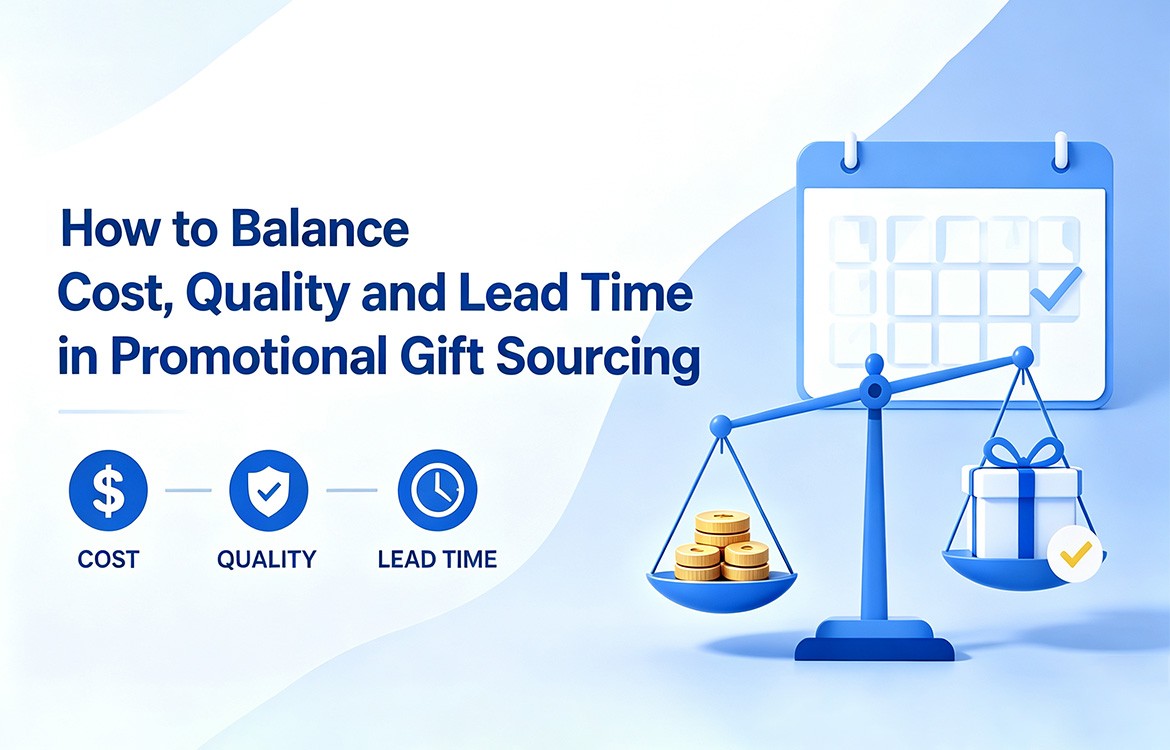
Every promotional gift project has three goals: stay within budget, meet quality requirements, and deliver the products in time for the campaign or event. These goals are closely connected.
A change in materials, logo application, packaging, or shipping can affect all three. Successful sourcing is therefore not about managing cost, quality, and lead time separately, but balancing them around the project's actual needs.
Set Clear Priorities Before Comparing Products
To compare quotations effectively, buyers first need to define the budget range, quality standards, and required delivery date. Broad requests such as “good quality” or “as soon as possible” may lead suppliers to base their quotations on different assumptions, making the resulting prices and proposals difficult to compare.
Quality requirements should reflect how the product will be used. An exhibition giveaway does not need the same materials, durability, or presentation as a premium gift for key clients. Once the budget, quality requirements, and delivery date are clear, the available trade-offs become easier to assess. If quality and delivery are fixed, there may be limited room to reduce the price. If the budget is fixed, the product, decoration method, or packaging may need to change.
Reduce Total Cost, Not Just Unit Price
The lowest unit price does not always result in the lowest overall cost. Decoration, sampling, packaging, inspection, freight, and possible rework all contribute to the final amount.
Meaningful savings usually come from optimizing the product plan rather than choosing the cheapest option. Standard colors and existing product designs can avoid additional development costs. A different decoration method may achieve the same branding effect for less, while simpler packaging can reduce material and shipping costs when presentation is not a priority. Product dimensions and carton volume also matter, as freight can outweigh the savings on an inexpensive item.
The goal is not to lower every specification, but to invest where the difference matters. Simplifying packaging may be sensible, while reducing the material quality of a frequently used product could affect both function and brand perception. Initial savings can quickly disappear if replacements or urgent air freight become necessary.
Turn Quality Expectations into Measurable Standards
Once quality requirements have been agreed, they should be translated into clear production specifications. Before manufacturing begins, key details such as materials, dimensions, product color, logo size and placement, decoration method, packaging, and acceptable variations should all be confirmed.
A pre-production sample allows both buyer and supplier to verify that these specifications have been correctly understood before mass production begins. Final inspections should then be carried out against the approved sample and agreed specifications, helping ensure consistent quality throughout the order.
Plan Backward from the Delivery Date
Lead time is not only determined by production. Product confirmation, sample approval, quality inspection, international shipping, and customs clearance all require time and should be considered when planning the schedule. A reliable timeline starts with the required delivery date and works backward, setting clear deadlines for each stage of the project.
Many delays happen before production even begins. Product details may not be finalized, samples may require multiple revisions, packaging decisions may change at the last minute, or shipping arrangements may be made too late. These changes can quickly reduce the time available for manufacturing and transportation.
When the timeline becomes tight, simply requesting faster production may not be the most effective solution. Instead, adjusting the project plan can often reduce risk. Choosing an existing product, standard colors, simpler decoration methods, or simpler packaging can help shorten the process while maintaining the key elements of the campaign. This approach helps avoid unnecessary delays and expensive last-minute shipping.
Conclusion
In promotional gift sourcing, cost, quality, and lead time are largely determined before production starts. Defining the project's priorities early makes it easier to compare options, use the budget effectively, set realistic quality standards, and keep delivery on schedule.
At ENPAI PROMOTIONS, we work with clients to turn project requirements into practical sourcing solutions. By identifying potential challenges early and making informed decisions from the beginning, we help create smoother processes, reduce risks, and deliver more reliable results.